Net Zero
We’ve got 5 years….
To find a route map to achieve net zero carbon or adapt to climate change sufficiently, a first step is to know the baseline of the current and predicted future carbon emissions of the area as if no external intervention was taken, ie the business-as-usual scenario (BAU).
This allows us to
a: know where the most effective interventions are and
b. allows for an accurate comparison after carbon reductions ie in 5/10 years time.
The parameters:
1. Housing/buildings
2. Transport
3. Agricultural
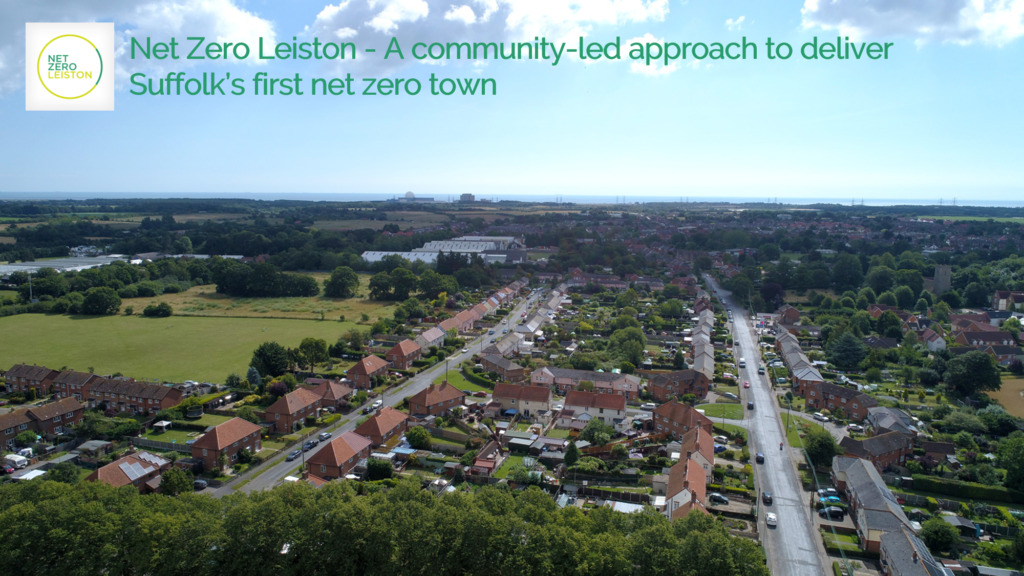
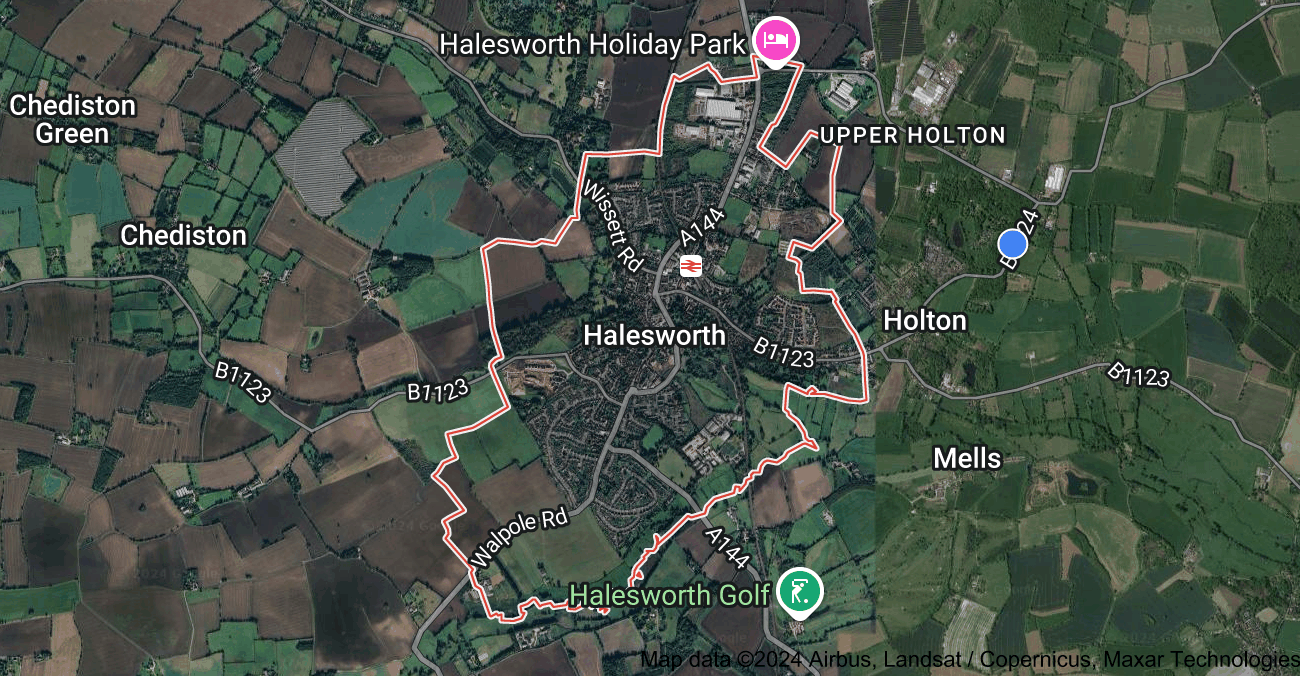
Leiston undertook this baseline study 5 years ago (2021) their report is below. Using a tool developed by the Centre for Sustainable Energy and University of Exeter, the baseline of Halesworth is below (thanks to David). This report is following a conversation with the architect of the Leiston report, Jack Raven.

Halesworth
Opergy Proposal for Net Zero Pathway for Halesworth
Leiston’s 3 successes
House energy
The Energy Efficiency programme has been the most successful in Leiston and is recommended by Jack as “low hanging fruit”. Funding available from “Energy Company Obligation Fund” for wall & roof insulation, heating (including ASHPs), solar panels, in private housing that meet certain criteria. They have suffered from low take-up because the company knocks on people’s doors and people think they are “cold callers”. Similar funding pot available for local authority housing, which is being piloted currently in Lowestoft.
“Retrofit Suffolk” project for domestic housing (for people who don’t qualify under the Energy Co Obligation Fund), offering 0% interest loans as well as some grants.
35 properties have been worked on, which Jack felt was rather low but said that once people start talking about it, momentum builds.
Leiston has done some non-domestic work: Groundwork East consultancy went into a school as part of an ESDC fund for non-domestic projects, reducing emissions. Energy efficiency audits on non-domestic properties/organisations can be carried out by Groundwork East.
EV Charging points
Prior to June, there were no public EV chargers in Leiston, now 3 planned to be installed by middle of June next year: 3 sites now have chargers: (Osprey at the Co-op at 85p per kwh); Plug-In Suffolk (an SCC initiative, needs publicly owned land); Sizewell C funded 2 sites (town car parks) with 2 EV chargers on each, installed by E-Volt, recommended as EV charger suppliers as they can work with a range of models to return funding streams to installers etc. Leiston expecting to have 10 EV chargers shortly.
Cycling scheme
To launch 2025: Leiston 18 hire bikes (following a city-type model, hire for 30 mins+), 50/50 electric and conventional. Mainly focused on the town centre near residential areas, no more than 10 minutes walk. Sizewell C funded, costs are covered for 3 years and then Net Zero Leiston hope that profits will cover costs of an on-going scheme. A local supplier manages the scheme, bikes are fitted with GPS trackers, users are incentivised to take bikes back to a docking station. “Active Cycling” company involved, possibly setting up a scheme in Woodbridge too.
Possible Pathways
We’ve got 5 years….
Explore if Halesworth could be a pilot for replicating what’s happened in Leiston (from which there could be learnings about how to roll out the project to other similar sized market towns)?
Opergy can help with this. Can we replicate what Opergy have overseen in Norfolk (7 parishes), and aim for 7 communities in Suffolk to be surveyed/put on the road to Carbon Neutrality? Make the case for that to SCCP/OperGy and perhaps team up with Beccles and Bungay for 3 projects in our part of North Suffolk? Work collaboratively to achieve faster and perhaps bigger/better?
Baseline study OperGy? Is that needed or could we look at the Leiston one and assume we are pretty similar and just get on with things?
Commercial energy efficiency: https://www.eastsuffolk.gov.uk/housing/energy-efficiency-and-warm-homes/energy-efficiency-help-and-advice/
Domestic Energy efficiency: https://www.warmhomessuffolk.org/retrofit-assessment-voucher-scheme
I would start directing people here. There is a loans scheme as well. ECO funding is consumer led, and depends which installers/energy companies operate in your area. Some information is here: https://www.ofgem.gov.uk/environmental-and-social-schemes/energy-company-obligation-eco
Flag up to SCCP – can they offer support/funding? Connect with SCCP (Suffolk Climate Change Partnership) SCC so they are aware and can join up dots
Citizens Advice are now advocates/information for climate change and energy efficiency.
Insulation/Energy projects recommended for “low hanging fruit” EV chargers and bikes, as well as solar panel installation, recommended for public facing initiatives – things that people can see!
(Thanks Kim, for notes)