Produced by Opergy
March 2026
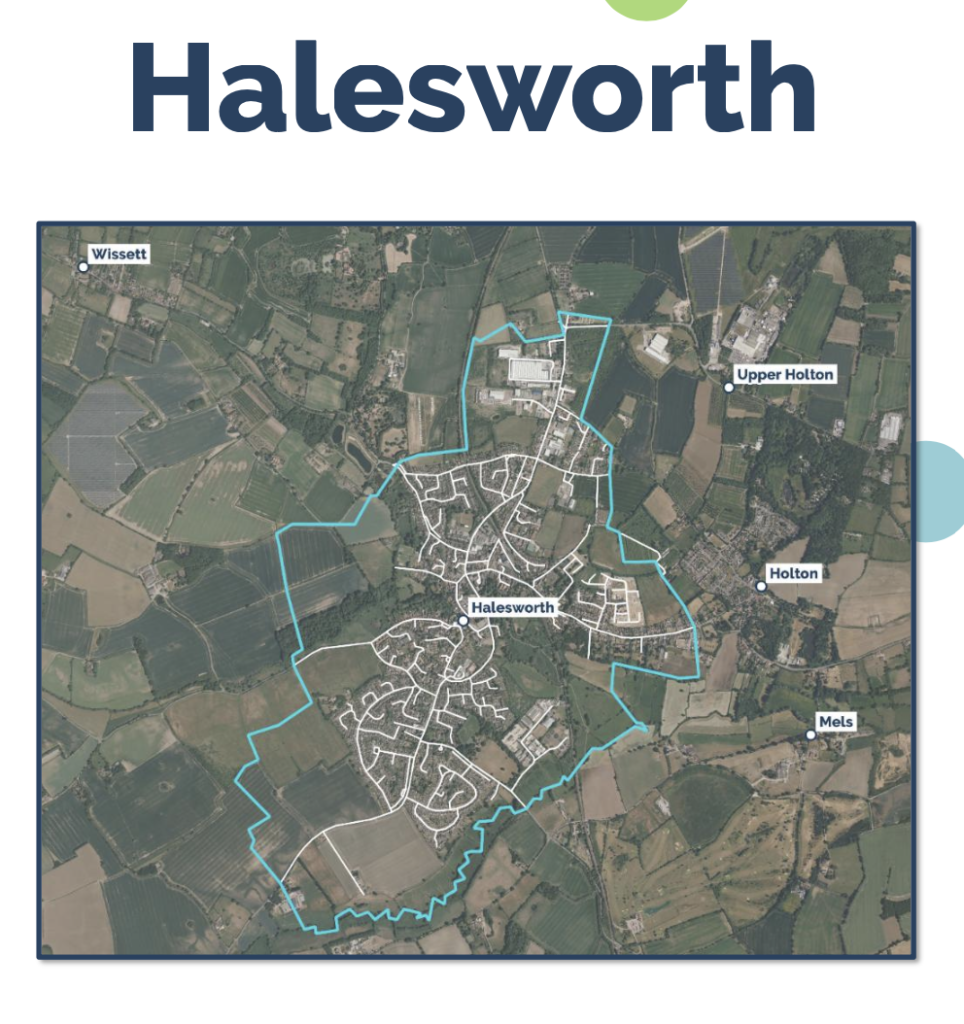
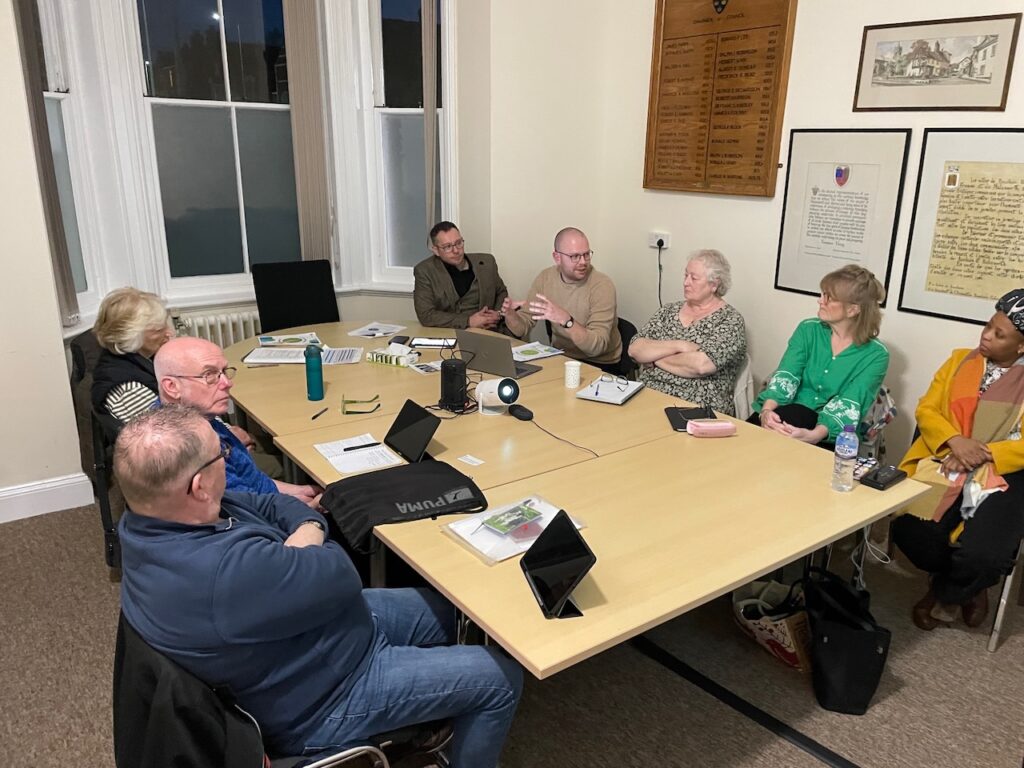
Dr Jonny Ruffell and Johnathan Reynolds presented the ‘A Carbon Baseline report for Halesworth’ to the Halesworth Town Council on 2nd March 2026.
Halesworth ASH did a fair scrutiny on the first report published for our Energy Conference 2025 (particular thanks to Pippa Merricks for her diligence here) and Opergy took these challenges on board and presented their final report.
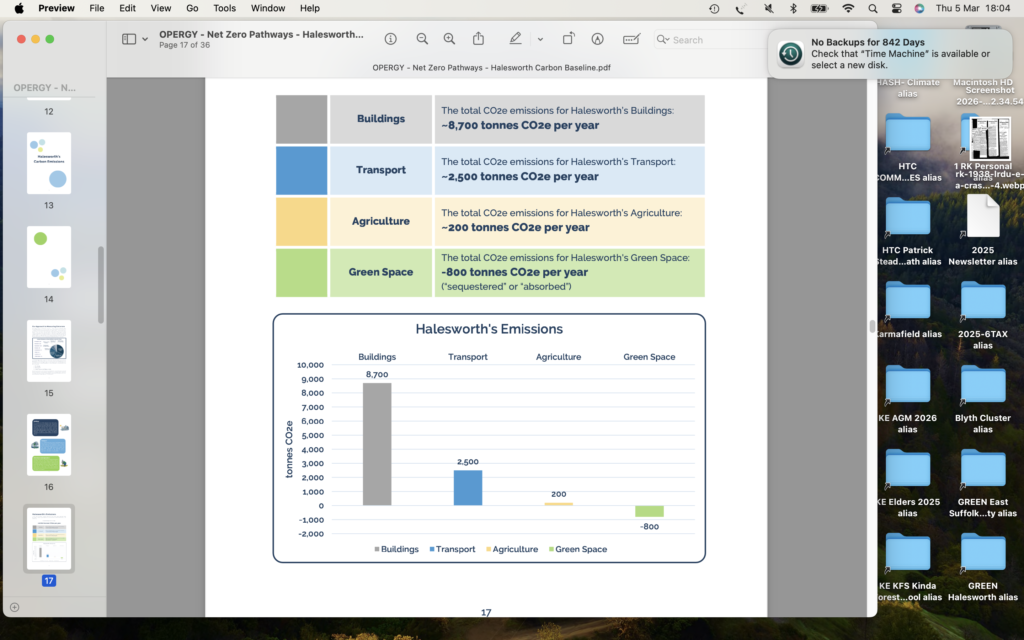
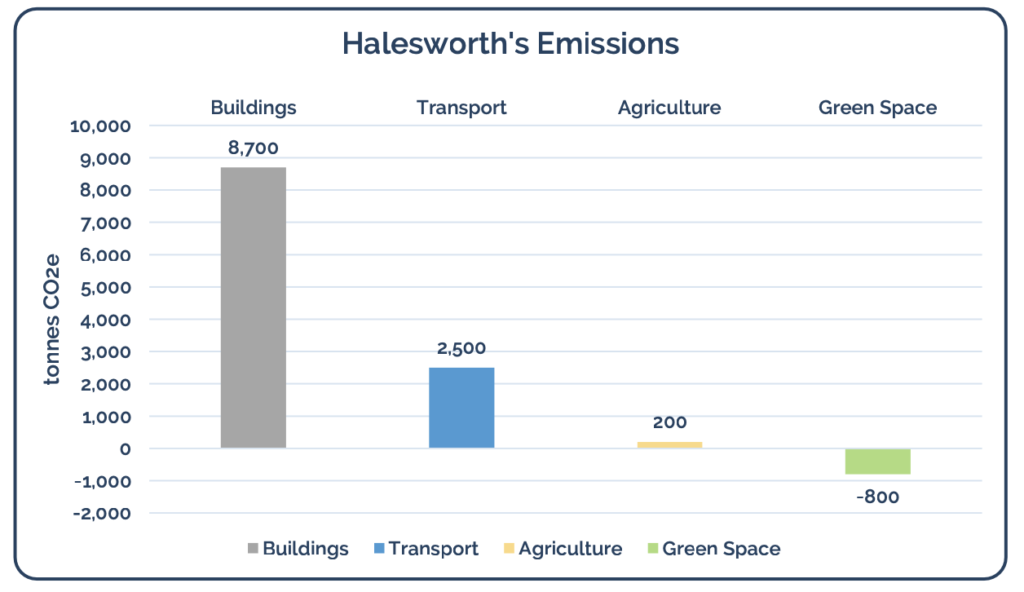
It gives us in Haleworth a fair and fascinating baseline of our carbon usage: how we as individuals, as industry, and through transport contribute to our carbon load, and how we offset it through our green spaces. This report will guide our Energy Champion. It can feed into our revision of our neighbourhoood plan. It will give us a scaffold on which to base a 5 to 10 year plan. It will give us a point to measure from in those years time.
Our Energy Champion has already used the report to reach out to domestic residences with EPCs of F and G.

Domestic buildings
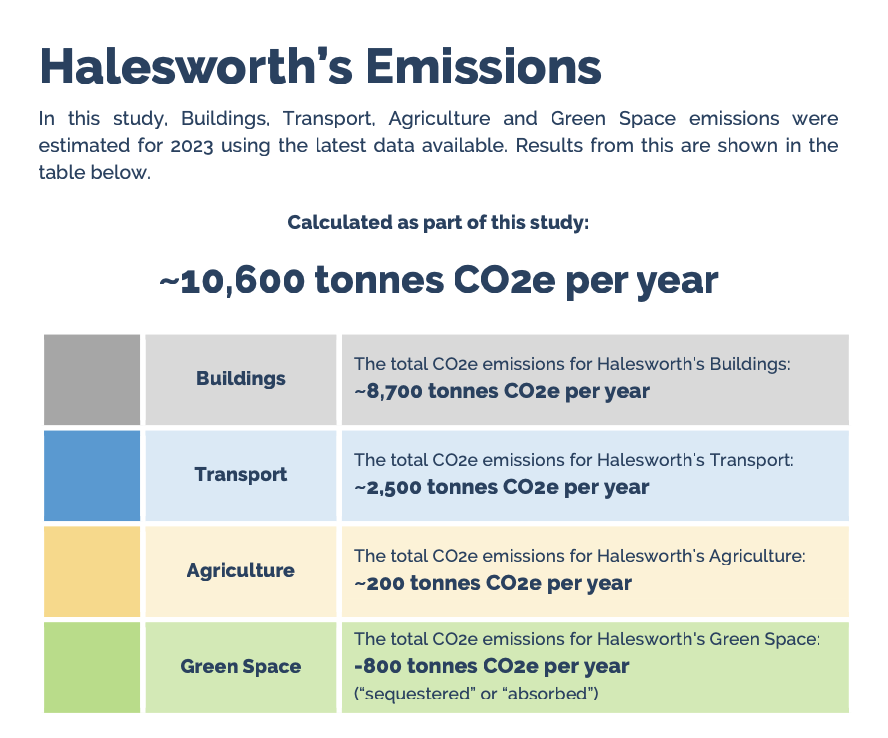
Buildings contribute most of our communities energy usage. (8,700 tonnes Co2e per year). This is within our reach to change. Our 2,700 domestic homes are heated primarily with gas, lite with electricity, and uses 6490 tonnes. Reducing these emissions is not only a significant part of the transition to net zero, it will cost us less, especially with the potential volatility of energy prices.
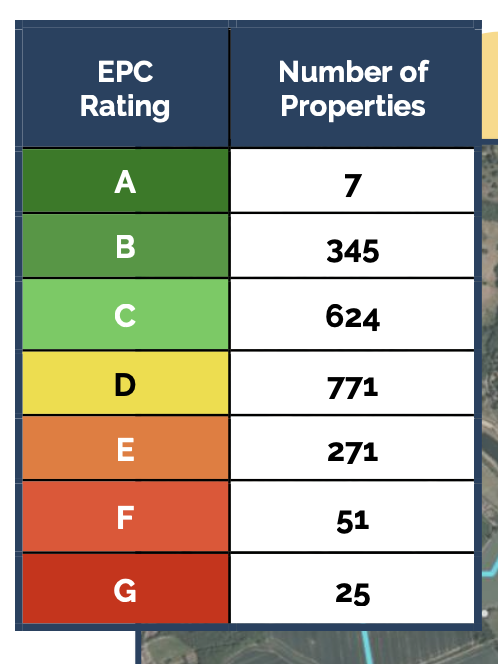
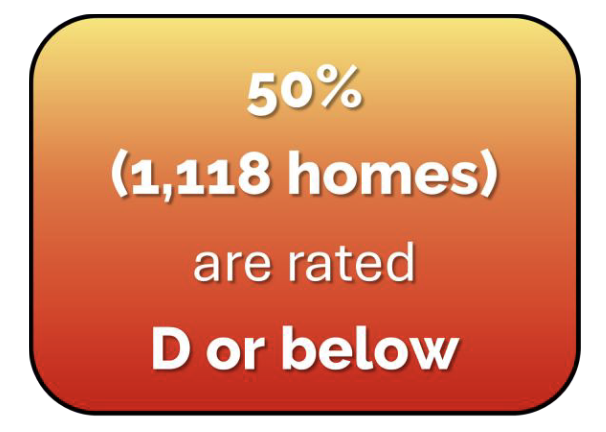
- Over 50% of our homes are rated D or below and this figure will probably increase taking into account the 600 homes without EPCs (unsold since 2008) as these will probably be older and less energy efficient homes.
- 82% of homes use gas for heating. Only 17% are heated using electricity. Not only are there far more efficient radiators on the market now, there are government funds to convert to solar with or without battery.
Non Domestic Buildings
Such as offices, schools, shops and public building
- Less than half of Non domestic buildings have an EPC!
- 59% (86 properties) have are rated D or below
- Landlords need to upgrade their rented properties to and EPC of C or above.
Transport
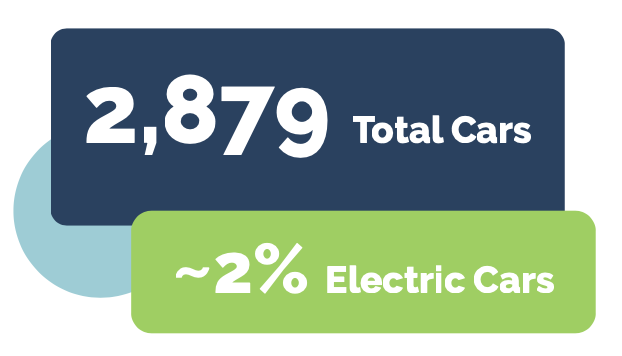
- Of the 3,698 vehicles in Halesworth only 2% (63) re electric, which is a relatively low percentage. Electric vehicles eliminate tailpipe carbon emissions, but ehri numbers are too small to make a big impact ono the towns overall transport emissions.
Greenspace
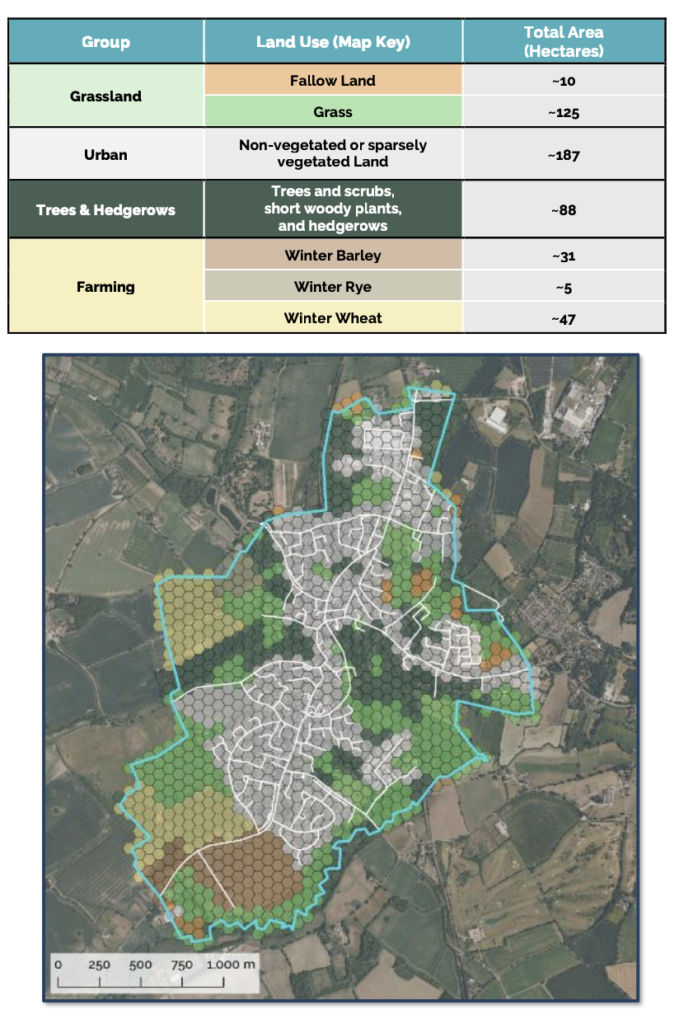
Thank goodness for the Millennium Green! Green space is an essential part of Halesworth, from Parks, and grasslands to gardens, hedgerows and of course, TREES, the great carbon sinks. Green space not only plays a vital role iin redcing carbon but also supports our physical and metal wellbeing.
Mature trees are particularly effective carbon sinks as well as habitat and hotel to thousands of of inhbaitants, plant and animal. But even small areas when connected as part of a wider network of greenery, contribute meaningfully to the towns overall carbon balance, provide shade and cool temperatres, reduce risk of floodiing, filter and improve air quality
- 18% of Halesworth has trees and hedgerows (21% of Greater London is covered by tree canopy, 18% Norwich. The recommended amount is 20%)
- 27% of Halesworth is covered by grass.